


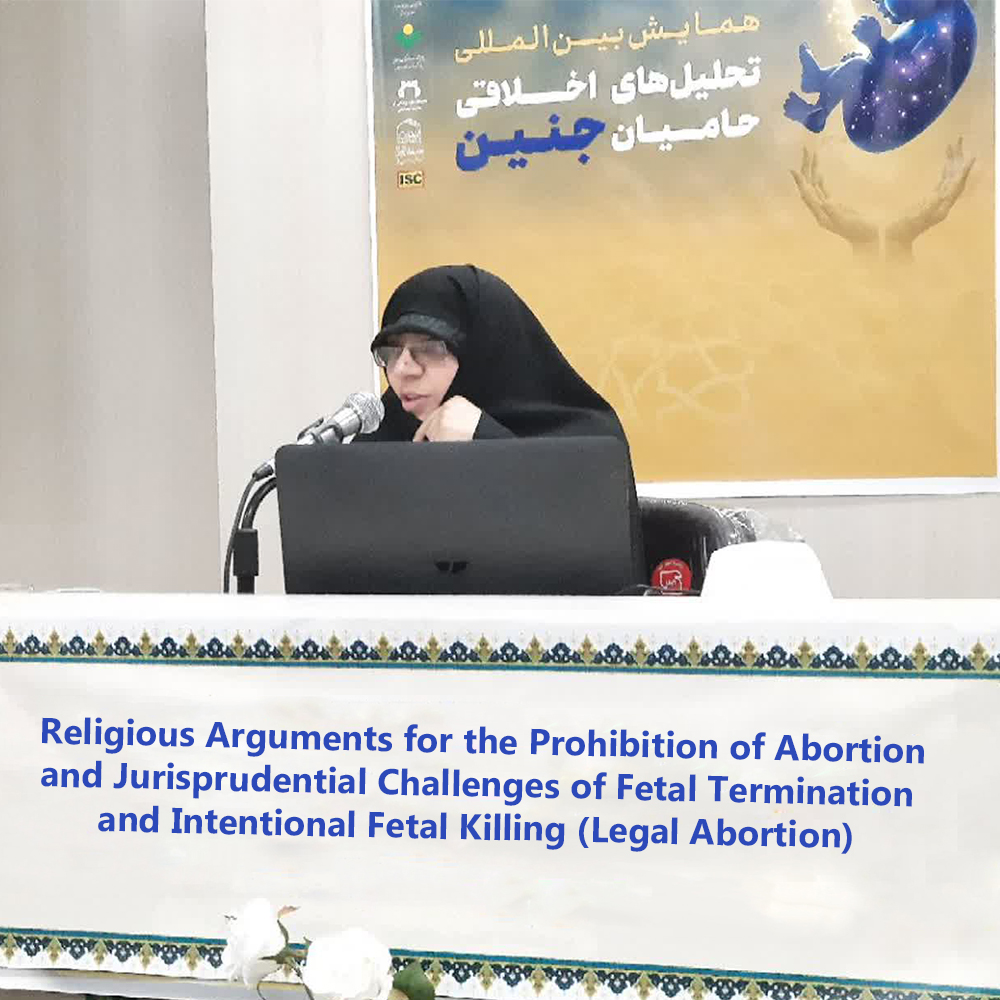
“Religious Arguments for the Prohibition of Abortion and Jurisprudential Challenges of Fetal Termination and Intentional Fetal Killing (Legal Abortion)”
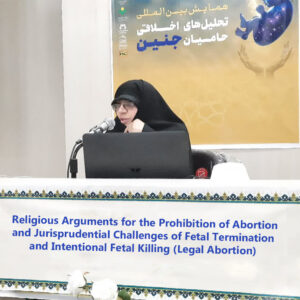
The 14th pre-session of the International Conference on Ethical Analyses of Fetus Advocates, titled “Religious Arguments for the Prohibition of Abortion and Jurisprudential Challenges of Fetal Termination and Intentional Fetal Killing (Legal Abortion),” was held with a presentation by Dr. Eftekhar Yousefi Roshanavand, respected Deputy for Education and Training at Al-Zahra University, on Monday, December 1, 2025, at Al-Zahra University.
At the beginning, the scientific session’s chair, Dr. Alireza Ale Bouyeh, after introducing the academic activities of Dr. Yousefi Roshanavand, stated that Islam and Ja‘fari jurisprudence consider abortion strictly forbidden based on strong rational arguments, and that intentional killing of a fetus—similar to the killing of a fully formed human being (a protected soul)—is subject to the punishment of qisas (retributive justice). He added that various discussions exist among jurists on this matter, which Dr. Yousefi Roshanavand would analyze in detail during the session.
In her presentation, Dr. Yousefi Roshanavand stated that according to Islamic jurisprudence, as well as the jurisprudence of the Ja‘fari Shi‘a school, abortion is absolutely forbidden (haram), supported by strong Qur’anic and narrational evidence from the traditions of the Infallibles (peace be upon them). She then discussed Qur’anic verses and Prophetic traditions on the prohibition of abortion, and afterward referred to non-textual arguments supporting the prohibition, explaining several rational proofs and the scholarly consensus among Shi‘a jurists. She also briefly outlined the exceptional cases permitted in jurisprudence, including situations involving serious threats to the mother’s life or severe fetal abnormalities.
She then clarified several jurisprudential terms relevant to this ruling, such as “the condition of definitive medical diagnosis in practice,” “the meaning of haraj (severe hardship) in permitting termination of a malformed fetus,” “the hardship condition in caring for the child,” and “the requirement of the period before ensoulment.” In conclusion, she addressed several misconceptions and misunderstandings about abortion that are currently widespread in society and social media.