
Unveiling of the Joint Work Alike in Creation at the Kazan International Conference; With the Collaboration of Scholars from Iran, Italy, Russia, South Africa, India, Pakistan, and Thailand
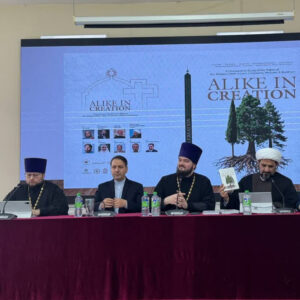
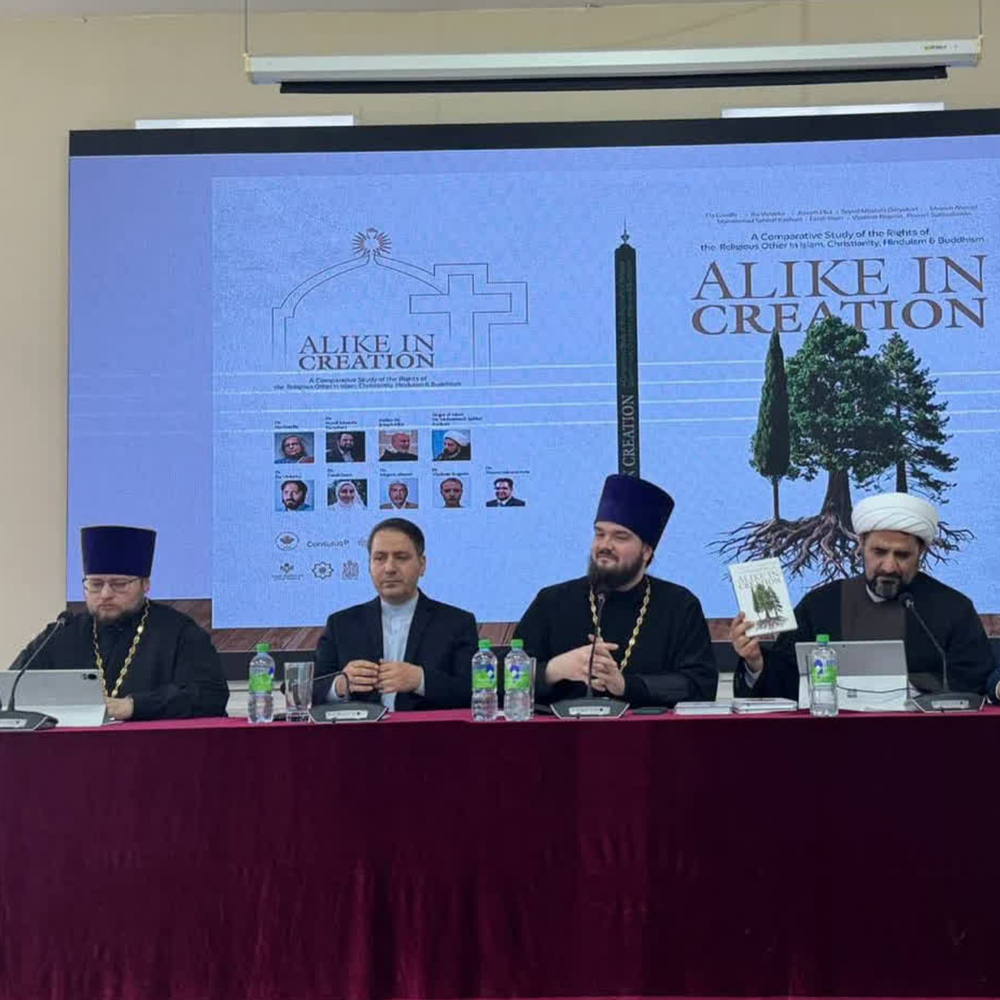
According to the Public Relations Office of the Islamic Sciences and Culture Academy (ISCA), during the International Conference on “The Islamic Studies Heritage of the Kazan Theological Academy,” the monumental and transformative work Alike in Creation: A Comparative Study of the Rights of Non-Coreligionists from the Perspective of Islam, Christianity, Hinduism, and Buddhism was officially unveiled.
The ceremony, attended by prominent Orthodox and Muslim scholars as well as cultural diplomats, marked a significant milestone in scholarly diplomacy between Iran’s seminaries and academic centers around the world.
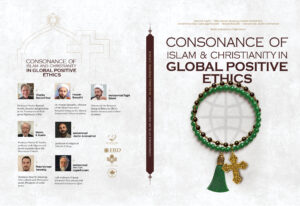
This unique volume was authored by scholars of different religions through a “simultaneous co-authorship” approach. Rather than writing about one another, the contributors sat together at one table and wrote with one another, dedicating their pens to the cause of global peace.
The contributors—who prepared various chapters based on their respective religious traditions—constitute a distinguished international group of scholars, including:
Professor Joseph Ellul (Maltese priest and philosopher from the University of St. Thomas in Rome);
Dr. Ela Gandhi (granddaughter of Mahatma Gandhi and prominent human rights activist);
Dr. Mujib Ahmad (Professor at the International Islamic University of Pakistan);
Dr. Ilya Voyverko (Associate Professor at Moscow State University);
Dr. Farha Iman (Indian researcher and founder of the Sarva Dharma Samvaad Institute);
Dr. Vladimir Nikolayevich Rogatin (Head of the Islamic Studies Department at the Kazan Theological Seminary);
Dr. Prasert Suksasawin (Dean of the Faculty of Public Administration at Siam University, Thailand);
Dr. Mohammad Sahaf Kashani (Head of the Department of Theology at the Islamic Sciences and Culture Academy, Iran); and
Dr. Seyyed Mostafa Daryabari (Iran’s Cultural Attaché in South Africa).
This publication forms part of the series of works produced under the “International Conference on Comparative Ethical Studies in Islam and Christianity,” hosted by the Islamic Sciences and Culture Academy. Its scholarly strength stems from the unprecedented collaboration of an extensive network of universities and research centers worldwide.
The participation of institutions such as the Kazan Orthodox Theological Seminary in Russia, the Gandhi Peace Institute in South Africa, Siam University in Thailand, the International Institute for Islamic–Christian Dialogue, and the International Institute of the Era of the Appearance of the Sun (Iran), alongside reputable centers from India, Pakistan, and Italy, has elevated this work into a distinguished international publication characterized by strategic cooperation among multiple countries and academic institutions—aimed at bridging rationality and spirituality on a global scale.
The unveiling of this work in Kazan—regarded as a crossroads of civilizations—symbolized a historic transition from dialogue to “joint authorship” and reflected a new level of theological maturity in interfaith collaboration. The event’s coverage in Russia underscored the strategic importance of this project in strengthening traditional ethical values and elite diplomacy between Iran and Russia.
This wave of media attention conveyed to the international community a message of peace and coexistence emerging from the collaboration between the scholarly centers of Qom and Kazan—presenting it as an effective model for addressing global crises.