
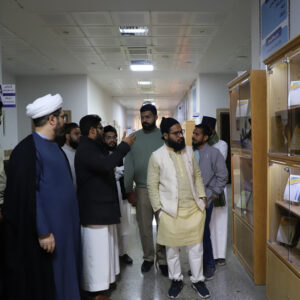

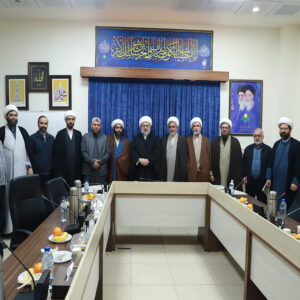
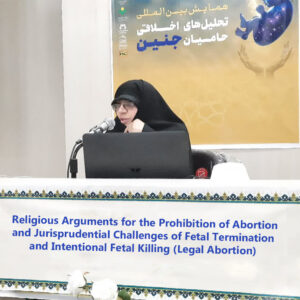
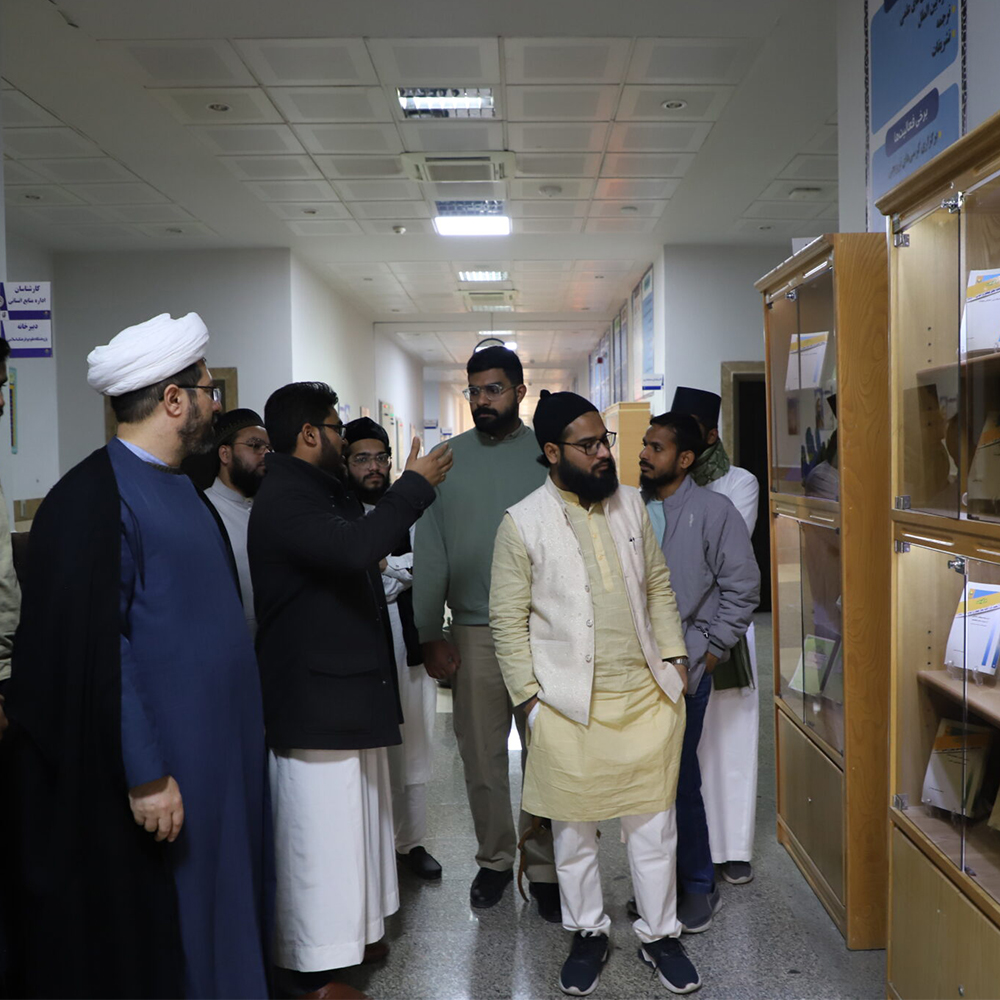
A group of Indian students visited Islamic Sciences and Culture Academy (ISCA), affiliated with the Islamic Propagation Office of Qom Seminary. The visit was conducted with the aim of becoming more closely acquainted with the scientific, research, and cultural capacities of the Islamic Republic of Iran. The students were from various fields of Islamic studies in India.
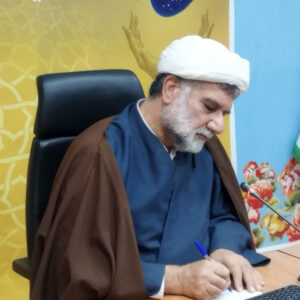
At the beginning of the program, Dr. Hossein Elahi Nejad, Vice President for Research at the Islamic Sciences and Culture Academy, introduced the objectives, structure, and activities of the academy. In his remarks, he referred to the academy’s overarching mission of producing Islamic knowledge and responding to the intellectual needs of the Islamic community and the international arena. He emphasized the institute’s distinctive role in strengthening Islamic discourse and contributing to the development of the new Islamic civilization.
Research Structure and Capacities
Continuing his speech, the Vice President for Research highlighted the breadth of the academy’s research activities, stating that:
ISCA currently comprises eleven specialized research centers in fields such as Qur’anic studies, teachings of the Ahl al-Bayt (peace be upon them), philosophy and theology, jurisprudence and law, civilizational studies, Mahdism and future studies, and other related areas. Each center focuses specifically on the production and development of religious knowledge in its respective domain.
He added that nearly 100 full-time faculty members and researchers are actively engaged in these research centers, alongside a number of affiliated scholars who participate in joint research projects on a part-time basis.
Publications and Scholarly Output
The Vice President for Research also presented a report on the academy’s extensive achievements, noting that in recent years a wide range of scholarly and research works—including books, academic articles, encyclopedias, and research projects—have been published in various religious, social, political, and cultural fields.
He further referred to the publication of several academic and research journals, among which reputable journals such as Qur’anic Studies, Critique and Reflection, and Islam and Social Studies were mentioned. These journals are published with the aim of expanding the frontiers of Islamic knowledge and fostering dialogue among domestic and international scholars.
International Academic Cooperation
In another part of his remarks, the Vice President for Research emphasized the importance of international academic interactions and stated:
Islamic Sciences and Culture Academy has maintained continuous relations with academic and research institutions in various countries over the years, and today’s visit by Indian students is considered a continuation of this scientific and cultural engagement.
At the conclusion of the introductory session, the students visited the exhibition of the institute’s publications and research outputs, where they became directly familiar with the institute’s activities and published works.