
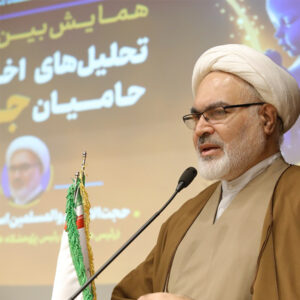

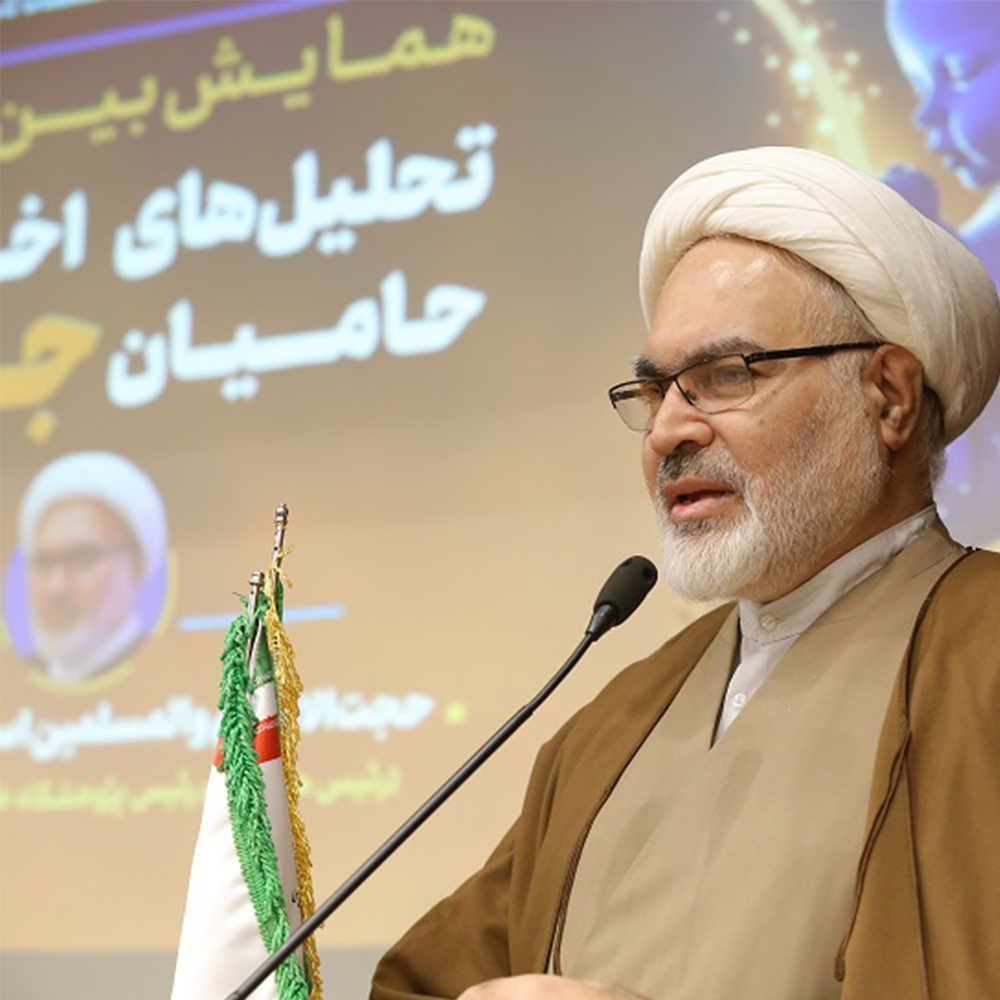
The President of the Islamic Sciences and Culture Academy (ISCA) described individualism as an ethical weakness and, while outlining key points regarding moral and social responsibility, characterized individualistic attitudes as contrary to the foundations of Islamic ethics.
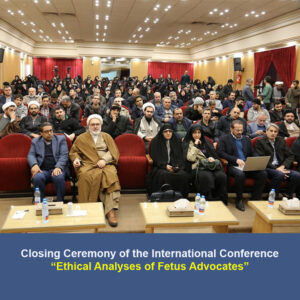
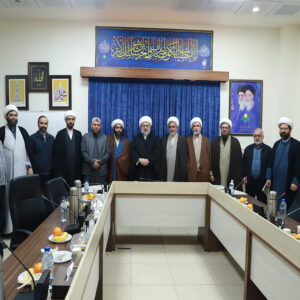
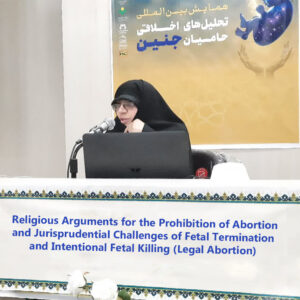
According to the Public Relations Office of ISCA, citing Tabligh News, Professor Najaf Lakzaei, President of Islamic Sciences and Culture Academy, made these remarks at the closing ceremony of the International Conference “Ethical Analyses of Fetus Advocates,” held at the Sheikh Tusi Hall of the headquarters building of the Office for the Propagation of Islamic Seminary.
He began by extending greetings and respect to scholars, officials, thinkers, and activists in the fields of ethics, science, and health, and stated that his first words were dedicated to all those who contributed to the organization and implementation of the conference—from officials of the Ministry of Health, Treatment, and Medical Education to university administrators, researchers, and esteemed professors who illuminated this path through their sincerity and deep insight.
He continued by expressing special appreciation to Dr. Ale Bouyeh, who, with more than two decades of focused and continuous efforts in this field, assumed the scientific and managerial leadership of the initiative, as well as to Dr. Mozoun, whose consistent presence and effective support—particularly in organizing the specialized pre-conference sessions—greatly assisted the process. He also thanked Dr. Soori, Head of the Research Center for Islamic Philosophy and Theology, and Dr. Danesh for their contributions to strengthening the intellectual foundations of the conference.
Professor Lakzaei emphasized the necessity of integrating governance into the executive cycle of population-related challenges, stating that society stands at the beginning of a forward-looking yet essential path. He expressed hope that the valuable discussions presented during the conference and its pre-sessions would be incorporated into the country’s governance system and enter the stage of practical implementation. In this regard, he described the situation as involving a key triangle of idea, system, and execution.
He explained that although valuable ideas may be proposed and even steps taken toward implementation, failure to properly integrate these ideas into the governance system will lead to challenges and disruptions at the execution stage. By “system,” he clarified, he meant a comprehensive perspective covering the entire governance cycle—from policy formulation and macro-level decision-making to regulation in both governmental and non-governmental sectors, where laws and regulations are developed and implemented through institutional cooperation.
The President of ISCA stressed the importance of monitoring and evaluating outcomes, noting that facilitation plays a particularly critical role. This stage, he explained, includes two main components: empowering stakeholders and removing obstacles in the path of action. This is followed by direct administration, where the main actors of the system—whether governmental or non-governmental—actively engage in policy implementation. Ultimately, evaluation and assessment are required to determine whether the services and outputs have achieved the intended objectives.
He added that the final link in this cycle is feedback—returning experience to the system to refine policies. If goals are not achieved, it must be examined whether the shortcomings lie in policy-making, regulation, or facilitation. Even in the absence of errors, evolving experiences and changing conditions may necessitate revisiting the entire cycle. Therefore, the step taken today should be seen as the foundation for a continuous future movement, requiring sustained follow-up so that the ethical and scientific ideas of scholars become institutionalized in executive bodies and yield tangible results.
Professor Lakzaei then shared a brief anecdote: a grandson once asked his grandfather how he could know when he was ready for marriage. The grandfather replied, “When you feel a need to serve another person selflessly, then you are ready—because you have moved beyond selfishness toward altruism.”
He reiterated that individualistic perspectives contradict Islamic ethical foundations, stating that one of the major ethical challenges of contemporary society lies precisely at this point. High rates of singlehood and declining willingness to marry reflect a weakened sense of moral and social responsibility. Those who view service to others as a cultural or financial burden are, in fact, trapped in an individualistic mindset incompatible with Islamic ethical principles.
Dr. Najaf Lakzaei emphasized that Islam is founded upon transcending the self toward others and trusting in God Almighty. He cited the Qur’anic verse: “Do not kill your children out of fear of poverty; We provide for them and for you” (Qur’an 17:31).
In conclusion, he underscored the importance of ethical values in society and noted that the title “Ethical Advocates of the Fetus,” chosen for the conference, should evolve into a public movement aimed at strengthening moral values—a movement toward transcending selfishness and self-centeredness in favor of service and altruism. He concluded that if people learn to serve others not out of obligation but from an inner need for moral growth, many social and familial challenges will naturally be resolved.